
In the late 1980s and early 90s, Manchester was a city redefined by sound.
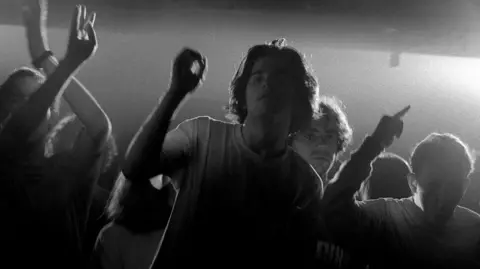
During a fleeting but potent time, sound, style and substances all became entangled to make the city - nicknamed the Madchester scene - the destination everyone wanted to be.
"There came a point where about a third of the office would decamp to Manchester every Friday night," noted a former NME journalist and radio presenter. "They'd pack up and go to Manchester and you wouldn't see them again until Tuesday or Wednesday the next week, looking like they'd had quite a good time."
That celebrated 'second summer of love' - as it was termed - shone brightly for a few years, from the Hacienda to Spike Island, before fading... paving the way for the rise of Britpop.
Today, over three decades later, Manchester appears to be having another moment, in musical terms, as numerous musicians, followers and music biz figures once again make the journey up north.
A Gathering of Prestigious Awards
In recent weeks, the city played host to the prestigious BRITs - moving the ceremony from London for the initial time in its almost half-century history.
Come Thursday, the recently opened Co-op Live arena - which has already been booked for the Brits again for next year - will also be the setting for the Music of Black Origin Awards for the first occasion.
Running from Wednesday through Saturday, the Radio 6 Music Festival returns to its now fixed northern home.
Are we seeing Manchester reclaim its prominence as the UK's primary music destination?
'Movement of Energy'
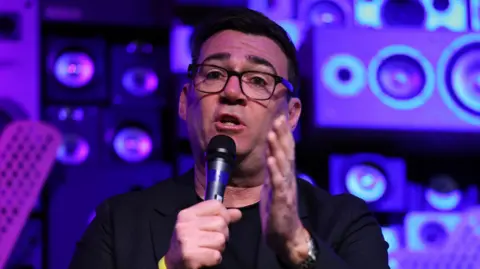
The city-region's Mayor believes this is the case.
He states that "ultimately, we are witnessing a shift of power, energy flowing into Manchester".
He notes: "This goes beyond those large-scale awards coming, more and more young talent is choosing to make Greater Manchester their headquarters."
He credits the trade organisation which runs the Brits for having organized a series of grassroots fringe events in the city.
"The awards ceremony offered more than a simple spectacle," he says. "They created opportunities within our neighborhoods."
The UK's "big three" record labels are all still headquartered in London. The mayor says he would "like to see a big label to have a major hub here in the city".
His recent declaration last week of the introduction of nocturnal transport from the city centre is, according to a spokesperson for venue advocacy, "the best thing" for music fans and venues alike.
'Magic Formula'
Although some parts of Manchester are still among the most deprived areas, it is recognised as one of the most rapidly expanding city-region economies in the country.
A senior executive who moved up from London five years ago, having previously worked for a major London arena, said bringing the Brits to Manchester was "the top priority" when opening the newest major indoor space in Europe.
"It has undoubtedly injected fresh energy into the event, being up here," she said of the event, which reportedly attracted a record-breaking worldwide viewership.
While big events can be "lost" in a massive metropolis like London, she says, the "fun secret sauce" that Manchester brings - including public art installations and pop star tram announcements - "was fully expressed".
The "exceptional effect" of having the Brits "embraced by" Manchester was also underscored.
The "excellent infrastructure", combined with its "historic artistic dynamism" and sonic legacy made the move north feel like "an obvious progression".
'Long-Term Development'
This isn't the Mobos' first rodeo outside of London. Over the past decade, it has headed to northern cities to the likes of Leeds, Liverpool and Newcastle.
Manchester-born MC Aitch is nominated for best hip-hop artist at this year's ceremony in his city of origin, where he will also do a set.
Aitch was spotted as a youngster by a local entrepreneur, while spitting bars at a local open mic night.

He decided early on to avoid the lure of London and to run his music business from Manchester, a place which he said "holds a distinct character" that "is impossible to copy elsewhere".
"Crucially, it's about building for the long term," he said.
He believes the recent buzz around the city has been "evidence" to the decision he made to stay, a decade ago.
'Cross-Generational'
However, challenges remain, as a Manchester-based vocalist notes.
The musician on the lineup thinks it's great that Manchester is "being highlighted". But, she asks: "How many locally-born acts are actually getting nominated?"
Only one of this year's in-competition Brit Award nominees actually came from Greater Manchester.
And beyond Aitch, there are only a small number of northerners in contention for a MOBO this year too.
The artist thinks there is still a "discrepancy" between the support of community musical foundations in the north and south.
"And, she warns, there is 'a danger' of 'merely transplanting something out of London and just dropping it into Manchester and assuming it's going to work' when 'the culture is completely different'."
If the music world is relocating from London again this week, then it needs to "contribute to the region", she adds, and not just pay it "lip service".

The singer will perform at a well-known city venue for the event's introducing evening. She has recently performed with local icons and underlines the "truly cross-generational" and "cooperative" make-up of the city.
"I certainly consider myself part of Manchester's new wave, but that's been mentored by the old guard, for sure."
Events like last month's fringe lab were "incredible", she adds, at "attempting to become part of the grassroots culture of the city".
The location puts on gigs but also runs music education programmes, training people for careers in jobs like sound engineering.
A venue director concurs it's great for Manchester to be getting these major international events, but at the same time he says: "I'm not sure that that so-called resurgence ever went away from Manchester".
"A steady progression has been happening of business-minded activity in this city for 50 years."


